NSAAC publication puts teen wellbeing a step closer to the centre of SA’s developmental future
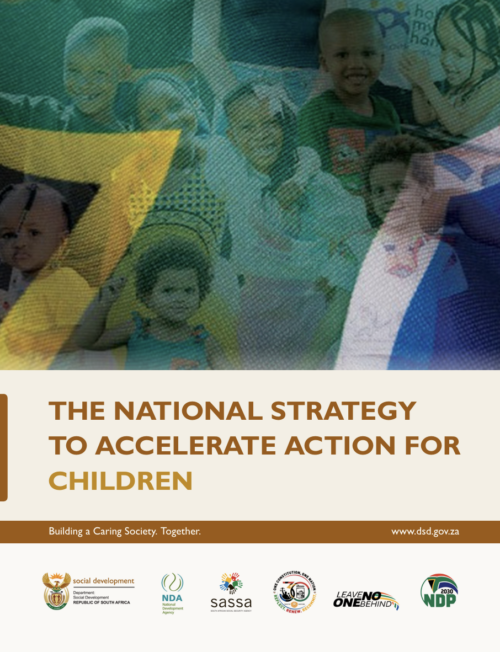
The Zero Dropout Campaign welcomes the publication of South Africa’s National Strategy to Accelerate Action for Children (NSAAC, the strategy). This landmark publication officially recognises adolescence, not simply childhood, as a national development priority requiring coordinated investment across government and society.
According to Statistics South Africa, 17.4% (approximately 10.7 million) of South Africa’s population are adolescents, typically 10 to 19-year-olds. This is a demographic that experts argue is too large and differing in its development experiences and needs for it to be conflated into broader terms and demographics, such as ‘children’. Differentiating adolescents is a necessary policy approach to ensure that their unique developmental needs are considered and catered to where possible.
The publication of the strategy follows Cabinet’s approval earlier this year and marks the culmination of an extensive collaborative process involving government, civil society, researchers, development partners, children, and adolescents. This strategy is an important shift in national thinking and acknowledgment that wellbeing is shaped at the intersection of education, health, protection, and social development. It also recognises adolescence as a distinct developmental stage requiring dedicated investment, coordinated services, and stronger institutional accountability.
For several years, the Zero Dropout Campaign has increasingly demonstrated through research and practice that preventing school dropout cannot be separated from improving adolescent wellbeing. Its work has increasingly illustrated that keeping young people engaged in learning depends not only on what happens inside classrooms, but also on whether they experience safety, supportive relationships, good mental health, positive identities, opportunities to participate, and a genuine sense of belonging.
“The publication of the NSAAC reflects a growing national consensus that supporting adolescent wellbeing is one of the most important investments South Africa should make,” said Merle Mansfield, Programme Director of the Zero Dropout Campaign. “The strategy is a significant and welcome shift that recognises that adolescence represents a critical window of opportunity to shape lifelong outcomes and improving them requires coordinated action across families, communities, health services, social development, justice, and education.”
Significantly, the NSAAC sets out one of South Africa’s most comprehensive policy agendas for adolescent wellbeing to date. Through Priorities 6 through 10, it also moves beyond traditional service delivery by recognising that adolescents need more than access to education and healthcare. It calls for routine wellbeing screening and mental health screening, pathways to further learning and work, and safer physical and digital environments. It also calls for greater investment in socio-emotional learning, mentorship, civic participation, and supportive environments where young people can thrive.
“This reflects what practitioners working with young people have been emphasising during our research and engagements,” added Mansfield. “When adolescents feel connected, supported and able to shape their own futures, they are far more likely to remain engaged in education, avoid harmful behaviours and transition successfully into adulthood.”
The strategy calls for stronger collaboration with civil society, research institutions, philanthropy, and the private sector, alongside improved systems for measuring progress and strengthening accountability. The Campaign is currently undertaking a detailed review of the full strategy and will publish a more comprehensive analysis in due course. This review will consider opportunities to strengthen implementation, financing, adolescent participation, and accountability as the government begins developing the accompanying National Plan of Action for Children.
The publication of the NSAAC provides a shared roadmap for South Africa’s future. It is now incumbent on every sector of society to ensure that its ambitions are matched by sustained political leadership, adequate investment, effective coordination, and transparent accountability.
/End
The NSAAC is available via the Department of Social Development.
For more information or to arrange interviews, contact Siyabulela Sandi on +27 78 668 2603 or via email on siyabulela@zerodropout.co.za.

